Balanced scorecard template
Turn the strategy into objectives, measures, targets and initiatives across the four classic perspectives.
Use this templateFree, opens in your browser. No sign-up.
What's on the board
- Financial · how do we look to shareholders?
- Customer · how do customers see us?
- Internal processes · what must we excel at?
- Learning & growth · how do we keep improving?
Table 1 columns: Objective, Measure, Target, Initiative.
Table 2 columns: Objective, Measure, Target, Initiative.
Table 3 columns: Objective, Measure, Target, Initiative.
Table 4 columns: Objective, Measure, Target, Initiative.
Also on the board
- Vision & strategy: become the go-to analytics tool for mid-size retailers by 2028
How to use this template
- Click Use this template. It opens in the Kelvo app as a new board, saved in your browser.
- Double-click any box to change its text. Replace the examples with your own content.
- Add notes fast. Press S for a sticky note in the middle of your view. A sticky is a box like any other: link it, recolour it, resize it.
- Paste a table. Paste comma- or tab-separated text and it becomes a table. Tab moves to the next cell and adds rows as you go.
- Present it. Frames become slides when you present, and the laser pointer helps you walk people through the board.
Good for
- balanced scorecard
- kpi
- strategy execution
- performance
- Preparing a strategy offsite or planning cycle
- Testing a new business or product idea
- Making a decision with explicit criteria
Related templates
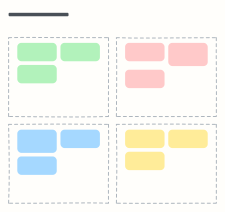 SWOT analysis
Map internal strengths and weaknesses against external opportunities and threats before you plan.
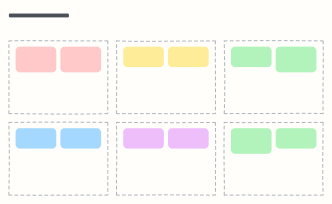 PESTLE analysis
Scan the Political, Economic, Social, Technological, Legal and Environmental forces around your market.
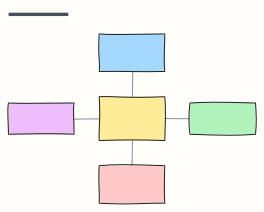 Porter's five forces
Judge how attractive an industry is by the five forces that shape competition and profit.
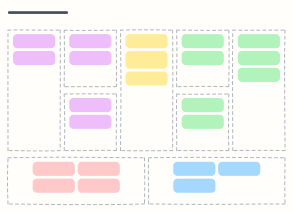 Business Model Canvas
Describe how your business creates, delivers and captures value on one page, in the nine classic blocks.
 North Star metric tree
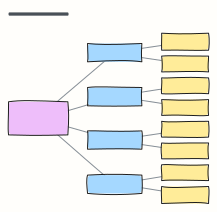
Break your North Star metric into input metrics a team can move, and the levers behind each one.
 HEART metrics framework
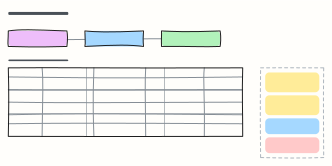
Google's HEART framework for UX metrics: goals, signals and metrics for happiness, engagement, adoption, retention and task success.