Zero-downtime schema migration template
Expand and contract: change a live database schema in small, reversible deploys, with the table before, during and after.
Use this templateFree, opens in your browser. No sign-up.
What's on the board
- Rules
- Every step is its own deploy · Each step rolls back on its own · Never rename in place: add, copy, switch, drop · SET lock_timeout = '5s' on every DDL · CREATE INDEX CONCURRENTLY on big tables
Table 1 columns: users, type, notes.
Table 2 columns: users, type, notes.
Table 3 columns: users, type, notes.
Also on the board
- Fix the backfill, re-run
- Counts + checksums match?
- 1. Expand: add first_name, last_name (nullable)
- 2. Deploy: write both old and new columns
- 3. Backfill in batches of 10k rows
- 6. Contract: drop full_name one release later
- 5. Stop writing full_name
- 4. Switch reads to new columns (flag)
- Before (v41)
- During (steps 1–5)
- After (v43)
How to use this template
- Click Use this template. It opens in the Kelvo app as a new board, saved in your browser.
- Double-click any box to change its text. Replace the examples with your own content.
- Paste a table. Paste comma- or tab-separated text and it becomes a table. Tab moves to the next cell and adds rows as you go.
- Paste code as code. Paste a snippet and it becomes a code block with syntax colouring; Tab indents inside it.
- Link by dragging. Hover a box and drag one of its dots onto another box. The whole box is the target, and links stay attached when you move things.
Good for
- database
- migration
- schema
- zero downtime
- engineer
- Designing a schema or an API before writing it
- Explaining a tricky flow in a code review or design doc
- Agreeing on team conventions such as branching and reviews
Related templates
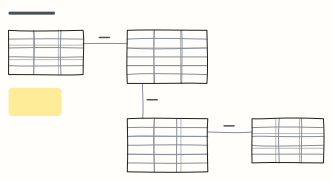 ER diagram (database schema)
Entities as tables with columns, types and keys, joined by one-to-many relationships — sketch a schema before the migration.
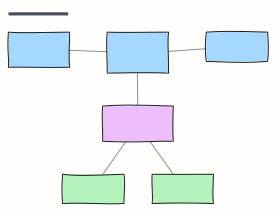 UML class diagram
Classes with fields and methods, associations with multiplicity, and an interface with two implementations.
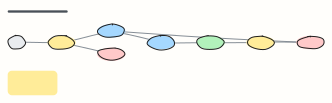 State machine
Every state an order can be in and the events that move it — the source of truth for status logic and tests.
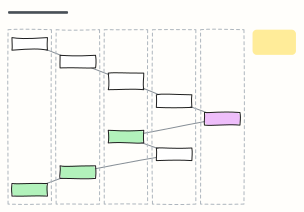 Sequence diagram (request flow)
Numbered steps across Client, API gateway, service, database and a third party — how one checkout request really travels.
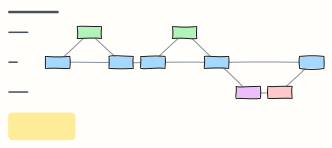 Git branching strategy
Trunk-based development with short-lived feature branches, pull requests, release branches and a cherry-picked hotfix.
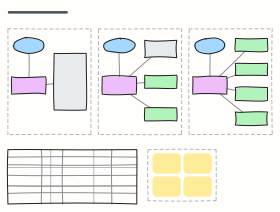 Strangler fig migration
Replace a legacy monolith slice by slice behind a routing facade, in three phases, with a tracker for each slice.