Incident postmortem template
A blameless postmortem: summary, timeline, five whys to the root cause, what went well or wrong, and owned actions.
Use this templateFree, opens in your browser. No sign-up.
What's on the board
- Root cause: five whys
- Why 2? checkout-api ran out of DB connections · Why 4? Typo in a shared config file, approved without a diff · Why 1? Checkout returned HTTP 500s · Why 3? Pool max dropped from 50 to 5 · Why 5? Config changes skip CI and canary
- What went well
- Alert fired within 4 minutes · Rollback took 11 minutes · Clear status updates every 15 min
- What went wrong
- 40 min chasing the payment provider · No dashboard for pool usage · Config diff not shown in the PR
- Where we got lucky
- Happened in EU morning, not peak US · A DBA was online by chance
Table 1 columns: Summary, INC-2291 · SEV-1 · EU checkout failing.
Table 2 columns: Time (UTC), Event.
Table 3 columns: Action, Owner, Priority, Due, Ticket.
Also on the board
- Blameless: we look for gaps in systems and process, not people to blame.
- Action items
How to use this template
- Click Use this template. It opens in the Kelvo app as a new board, saved in your browser.
- Double-click any box to change its text. Replace the examples with your own content.
- Paste a table. Paste comma- or tab-separated text and it becomes a table. Tab moves to the next cell and adds rows as you go.
- Paste code as code. Paste a snippet and it becomes a code block with syntax colouring; Tab indents inside it.
- Link by dragging. Hover a box and drag one of its dots onto another box. The whole box is the target, and links stay attached when you move things.
Good for
- postmortem
- incident
- sre
- root cause
- engineer
- Designing a schema or an API before writing it
- Explaining a tricky flow in a code review or design doc
- Agreeing on team conventions such as branching and reviews
Related templates
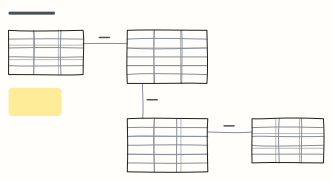 ER diagram (database schema)
Entities as tables with columns, types and keys, joined by one-to-many relationships — sketch a schema before the migration.
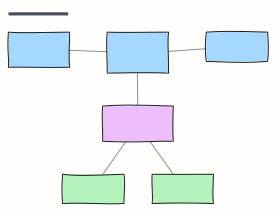 UML class diagram
Classes with fields and methods, associations with multiplicity, and an interface with two implementations.
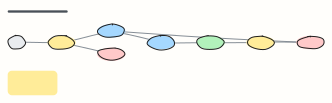 State machine
Every state an order can be in and the events that move it — the source of truth for status logic and tests.
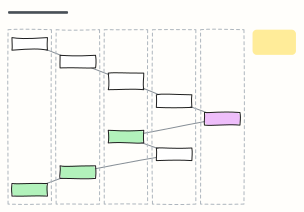 Sequence diagram (request flow)
Numbered steps across Client, API gateway, service, database and a third party — how one checkout request really travels.
 Incident response
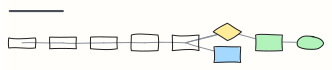
Detect, triage, mitigate, communicate, resolve and learn — an on-call runbook in one view.
 Observability stack
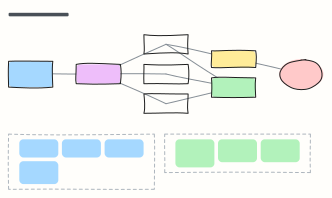
Metrics, logs and traces through OpenTelemetry into Prometheus, Loki and Tempo, with Grafana, alerting and SLO notes.