Layered (n-tier) architecture template
Presentation, application, domain, persistence and database layers, with cross-cutting concerns and the rules that keep layers clean.
Use this templateFree, opens in your browser. No sign-up.
What's on the board
- Presentation layer
- Web UI (React) · Mobile app · REST controllers · Admin console
- Cross-cutting concerns
- Logging + tracing · Authentication + authorization · Configuration · Error handling · Transactions · Caching policy
- Application / service layer
- Validation + DTO mapping · OrderService · CustomerService · BillingService
- Domain (business) layer
- Order + Invoice entities · Pricing rules · Discount policies · Domain events
- Persistence layer
- Customer repository · Order repository · ORM (Hibernate) · Cache adapter
- Database layer
- PostgreSQL · Redis
- Rules
- Each layer calls only the layer below it · Dependencies point down, never up · Domain layer has no framework imports · Avoid the sinkhole: layers that only pass calls through
How to use this template
- Click Use this template. It opens in the Kelvo app as a new board, saved in your browser.
- Double-click any box to change its text. Replace the examples with your own content.
- Sketch, then convert. Draw boxes and arrows with the pen, select the strokes and click Convert sketch: they become real boxes and links.
- Ask Kelvo right on the board (Pro). With Pro, type @kelvo and what you want in any box or text, for example “@kelvo add error handling”, and press Enter. The change is made there and the request disappears; ⌘Z undoes it.
- One page per level. Put the C4 context view on one page and the container view on the next, so each diagram stays readable.
Good for
- architect
- layered architecture
- n-tier
- software design
- Agreeing on boundaries and responsibilities between services
- Recording why a design was chosen (and what was rejected)
- Comparing integration options side by side
Related templates
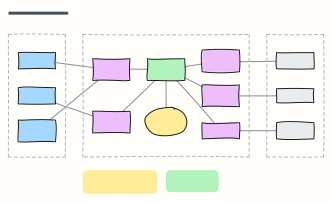 Hexagonal architecture (ports & adapters)
Keep business logic independent: driving adapters call inbound ports, the core uses outbound ports that adapters implement.
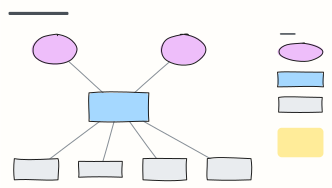 C4 system context diagram
C4 level 1: the system in scope, the people who use it and the external systems it depends on, with a legend.
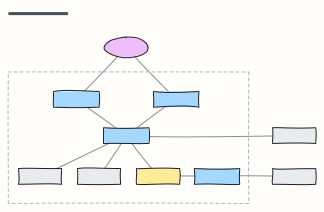 C4 container diagram
C4 level 2: the apps, APIs, databases and queues inside the system boundary, with the technology on each link.
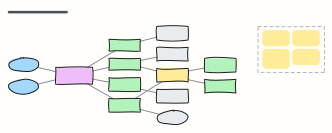 Microservices with API gateway
Clients behind an API gateway, services that each own their database, and an event bus for asynchronous work.
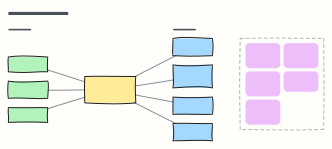 Event-driven architecture
Producers publish facts to a broker; independent consumers react — with the design rules that keep it reliable.
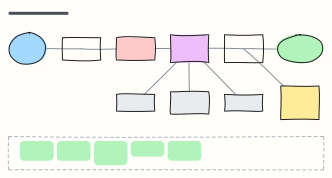 LLM application architecture
Production building blocks around a model: gateway, guardrails, orchestrator, cache, vector DB, tools and observability.