RAID log template
Risks, assumptions, issues and dependencies in one log, each with an owner and a next step.
Use this templateFree, opens in your browser. No sign-up.
What's on the board
- Risks — might happen
- Assumptions — believed true
- Issues — happening now
- Dependencies — needed from others
Table 1 columns: ID, Risk, Impact, Mitigation, Owner.
Table 2 columns: ID, Assumption, Validate by, Owner.
Table 3 columns: ID, Issue, Priority, Action, Due.
Table 4 columns: ID, We need, From, By, Status.
Also on the board
- Review weekly in the status meeting. Close items, don't delete them — the history matters.
How to use this template
- Click Use this template. It opens in the Kelvo app as a new board, saved in your browser.
- Double-click any box to change its text. Replace the examples with your own content.
- Paste a table. Paste comma- or tab-separated text and it becomes a table. Tab moves to the next cell and adds rows as you go.
- Add the next step with Tab. Select a box and press Tab: a new box appears, already linked. Type its label and press Enter.
- Present it. Frames become slides when you present, and the laser pointer helps you walk people through the board.
Good for
- raid log
- risks
- issues
- dependencies
- project manager
- Kicking off a project with shared scope and roles
- Tracking risks and milestones in one place
- Reporting status to stakeholders
Related templates
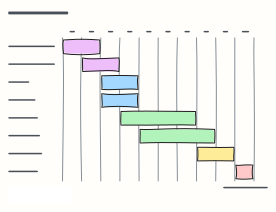 Gantt chart (project timeline)
Tasks as bars across ten weeks, coloured by phase, with the launch milestone — a quick project schedule.
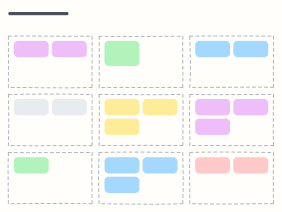 Project charter
Purpose, objectives, scope in and out, deliverables, milestones, budget, team and risks — the one page to approve a project.
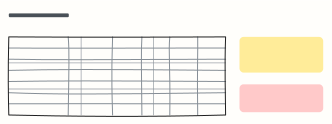 RACI matrix
Who is Responsible, Accountable, Consulted and Informed for each activity — ends the 'I thought you were doing it'.
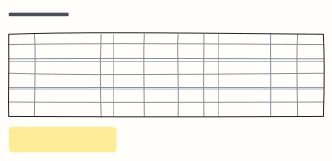 Risk register
Each risk with likelihood, impact, score, mitigation, owner and status, sorted so the biggest risks get attention.
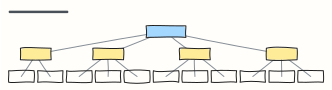 Work breakdown structure (WBS)
Break a project into phases and work packages small enough to estimate, assign and track.
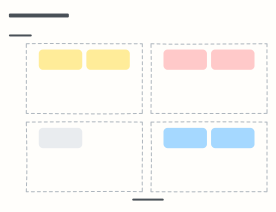 Stakeholder map (power / interest)
Place stakeholders by power and interest to decide who to manage closely, keep satisfied, keep informed or monitor.