System design interview board template
Work a system design question on one board: requirements, estimates, the high-level design and deep dives.
Use this templateFree, opens in your browser. No sign-up.
What's on the board
- 1. Requirements
- Shorten a long URL to a 7-character code · Redirect code → original URL · Custom aliases + expiry dates · Click analytics per link · 100M new URLs a month · Redirect p99 < 50 ms, 99.99% uptime
- 3. High-level design
- Key generation service: pre-made codes · URL service: POST /urls · URL store (DynamoDB): code → long URL · Client · Load balancer · Redirect service: GET /:code → 302 · Redis cache: hot codes, LRU · Click events (Kafka)
- 4. Deep dives + trade-offs
- 302 not 301, so every click is counted · Counter ranges per KGS node: no hash collisions · Cache the hot 20% ≈ 80% of reads · Shard the store by code (consistent hashing) · Rate limit creates per API key · Expired links: lazy delete + nightly sweep · Multi-region reads, single write region · Abuse: scan target URLs for malware
Table columns: Metric, Estimate, Working.
Also on the board
- 2. Back-of-the-envelope
- Time plan (45 min): requirements 5 · estimates 5 · high-level design 15 · deep dives…
How to use this template
- Click Use this template. It opens in the Kelvo app as a new board, saved in your browser.
- Double-click any box to change its text. Replace the examples with your own content.
- Paste a table. Paste comma- or tab-separated text and it becomes a table. Tab moves to the next cell and adds rows as you go.
- Paste code as code. Paste a snippet and it becomes a code block with syntax colouring; Tab indents inside it.
- Link by dragging. Hover a box and drag one of its dots onto another box. The whole box is the target, and links stay attached when you move things.
Good for
- system design
- interview
- scalability
- architecture
- engineer
- Designing a schema or an API before writing it
- Explaining a tricky flow in a code review or design doc
- Agreeing on team conventions such as branching and reviews
Related templates
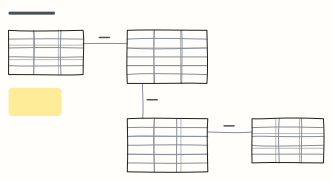 ER diagram (database schema)
Entities as tables with columns, types and keys, joined by one-to-many relationships — sketch a schema before the migration.
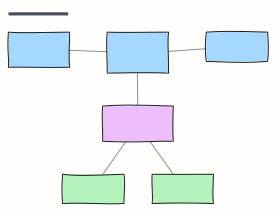 UML class diagram
Classes with fields and methods, associations with multiplicity, and an interface with two implementations.
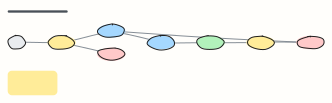 State machine
Every state an order can be in and the events that move it — the source of truth for status logic and tests.
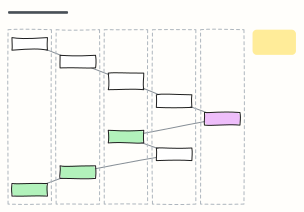 Sequence diagram (request flow)
Numbered steps across Client, API gateway, service, database and a third party — how one checkout request really travels.
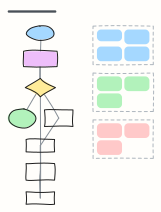 LLM agent loop
How a tool-using agent plans, calls tools, observes results and updates memory until the goal is met, with guardrails.
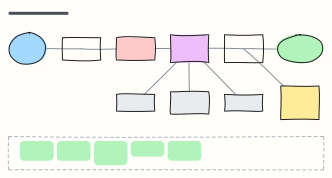 LLM application architecture
Production building blocks around a model: gateway, guardrails, orchestrator, cache, vector DB, tools and observability.