On-call incident runbook template
What the on-call engineer does when a page fires: acknowledge, judge impact, declare, mitigate first, then escalate and follow up.
Use this templateFree, opens in your browser. No sign-up.
What's on the board
- First 5 minutes
- Check the service dashboard + recent deploys · Check dependency status pages · Say what you see in #inc, even if unsure · Write a timeline as you go
Table columns: Severity, Example, Response, Updates.
Also on the board
- Escalate: secondary on-call + service owner
- Fix in hours, file a ticket, tune the alert
- Customers affected?
- Recovered in 30 min?
- Acknowledge within 5 min, open the alert's runbook
- Blameless postmortem within 5 days
- Page fires (PagerDuty)
- Mitigate first: roll back, fail over, scale out, flag off
- Monitor 30 min, resolve, status page update
- Declare incident: SEV1/2, open #inc channel, name an incident commander
How to use this template
- Click Use this template. It opens in the Kelvo app as a new board, saved in your browser.
- Double-click any box to change its text. Replace the examples with your own content.
- Link by dragging. Hover a box and drag one of its dots onto another box. The whole box is the target, and links stay attached when you move things.
- Sketch, then convert. Draw boxes and arrows with the pen, select the strokes and click Convert sketch: they become real boxes and links.
- Group by environment or region. Draw a frame (F) around a group of services; moving the frame moves everything inside it.
Good for
- on-call
- incident response
- sre
- runbook
- devops
- Design reviews and architecture decision meetings
- Runbooks and onboarding for on-call engineers
- Planning a migration or a cost-cutting pass
Related templates
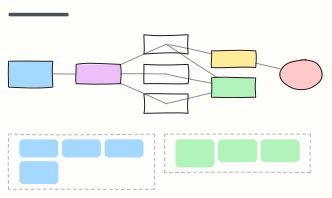 Observability stack
Metrics, logs and traces through OpenTelemetry into Prometheus, Loki and Tempo, with Grafana, alerting and SLO notes.
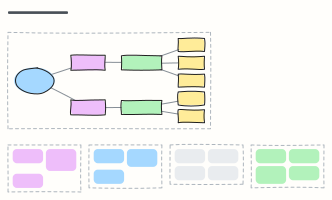 Kubernetes cluster overview
Ingress, services, deployments and pods in a namespace, with config, storage, control plane and add-ons around them.
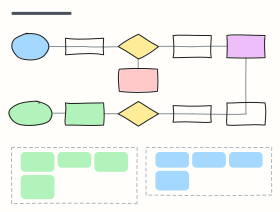 CI/CD pipeline with quality gates
From pull request to production: build, tests, security scans, staging, approval and canary release, with the gates in between.
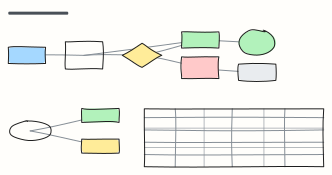 Canary & blue/green deployment
Release safely: shift a little traffic to the new version, check SLOs, then promote or roll back — plus a strategy comparison.
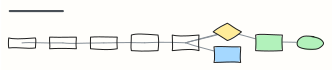 Incident response
Detect, triage, mitigate, communicate, resolve and learn — an on-call runbook in one view.
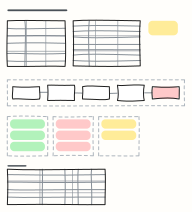 Incident postmortem
A blameless postmortem: summary, timeline, five whys to the root cause, what went well or wrong, and owned actions.