Product management templates
Boards for deciding what to build and why: roadmaps, one-page PRDs, prioritisation frameworks and opportunity trees. They're laid out as starting points, with example content you can overwrite.
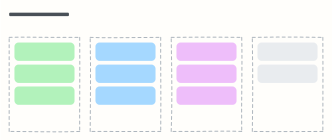 Now / Next / Later roadmap
An outcome-based product roadmap without fake dates: what we're doing now, next, later, and what we're not doing.
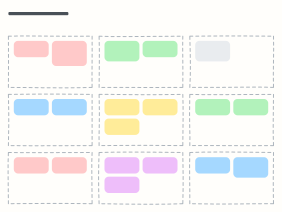 PRD one-pager
A product requirements doc on one board: problem, goals, non-goals, users, requirements, metrics, risks and timeline.
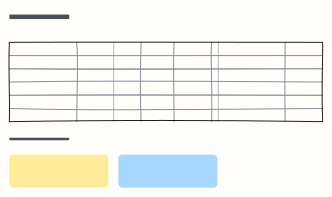 RICE prioritization
Score features by Reach, Impact, Confidence and Effort to rank a backlog with numbers instead of opinions.
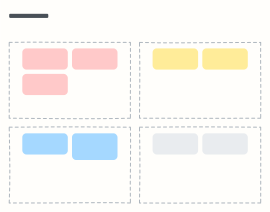 MoSCoW prioritization
Split a release's scope into Must, Should, Could and Won't-have-this-time so everyone agrees what ships.
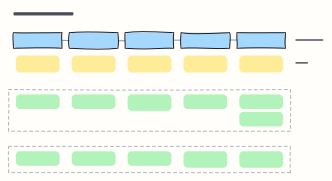 User story map
The user's journey as a backbone of activities, tasks under each, and stories sliced into releases (MVP first).
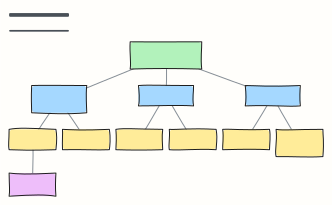 Opportunity solution tree
Connect one outcome to customer opportunities, candidate solutions and the experiments that test them.
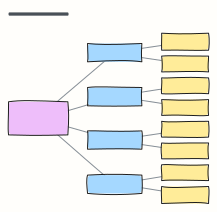 North Star metric tree
Break your North Star metric into input metrics a team can move, and the levers behind each one.
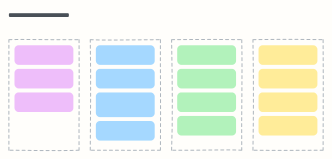 Feature launch checklist
Everything that has to happen before, on and after launch day, with an owner for each item.
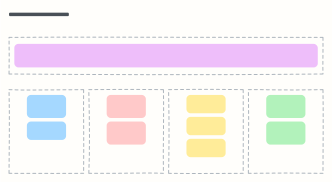 Product vision board
Vision, target group, needs, product and business goals on one page — align the team on why the product exists.
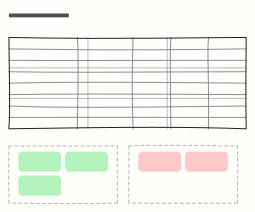 Competitive analysis
Compare your product against competitors feature by feature, then write down where you win and where you lose.
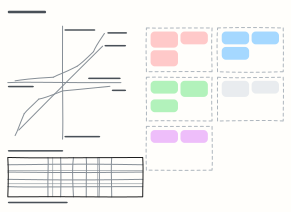 Kano model
Sort features into must-be, performance, attractive, indifferent and reverse by how they affect customer satisfaction.
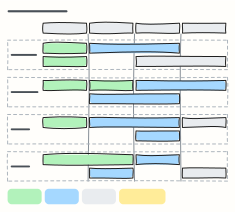 Quarterly product roadmap
A four-quarter roadmap by theme, with each initiative drawn across the quarters it spans and coloured by confidence.
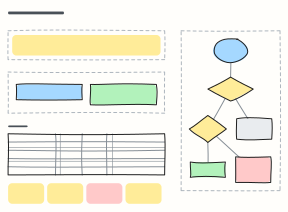 A/B test plan
Plan an experiment before it runs: hypothesis, variants, primary and guardrail metrics, sample size and the decision rules.
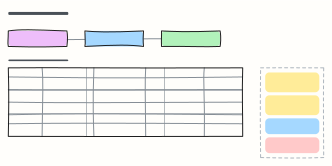 HEART metrics framework
Google's HEART framework for UX metrics: goals, signals and metrics for happiness, engagement, adoption, retention and task success.
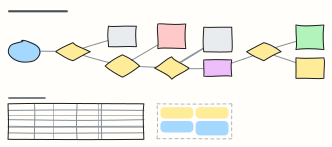 Feature request triage
A repeatable flow for incoming feature requests: dedupe, check strategic fit and evidence, score, then roadmap, park or decline.
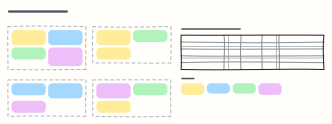 Customer feedback board
Cluster real customer quotes into themes, colour them by source, and rank the themes by mentions and revenue at risk.
 Product discovery board
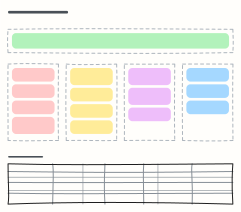
Run continuous discovery on one board: the outcome, customer opportunities, ideas, riskiest assumptions and an experiment log.
When to use them
- Planning a quarter or a release
- Prioritising a long backlog with a shared method
- Connecting outcomes to the work that should move them
Working on a product board in Kelvo
- Add notes fast
- Press S for a sticky note in the middle of your view. A sticky is a box like any other: link it, recolour it, resize it.
- Paste a table
- Paste comma- or tab-separated text and it becomes a table. Tab moves to the next cell and adds rows as you go.
- Let Smart Assist draft the next step
- Turn on Suggest, finish a label and pause: the next steps appear as dashed ghosts. Tab keeps them, Esc dismisses them.
- Present it
- Frames become slides when you present, and the laser pointer helps you walk people through the board.
Questions
Which prioritisation framework should I use?
RICE when you need to rank many ideas with numbers (reach, impact, confidence, effort). MoSCoW when you need to agree what's in and out of a fixed release. The Kano model when you want to know how customers will feel about features. Many teams use Kano to understand features and RICE to order them.
What's the difference between a roadmap and a backlog?
A roadmap shows the outcomes and themes you're working towards over time, for example as Now, Next and Later. A backlog is the ordered list of work items that deliver them. Keep the roadmap short and stable, and let the backlog change every sprint.
How do I connect metrics to the roadmap?
Start from a North Star metric tree: the North Star at the top, the input metrics teams can move below it, and the projects that should move each input at the bottom. Roadmap items that don't connect to an input metric deserve a second look.
Are these product management templates free?
Yes. Every template here is free and opens in your browser as an editable board, without signing up.