AI and machine learning diagram templates
Diagrams for teams building with models: retrieval-augmented generation, agent loops, evaluation plans and the guardrails around them. Each one names the usual components so you can cross out what you don't need and add what's specific to your system.
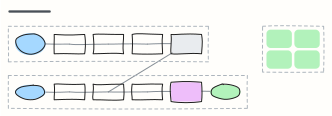 RAG pipeline
Retrieval-augmented generation end to end: ingest and embed documents offline, then retrieve, rerank and answer with citations.
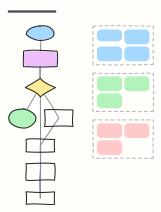 LLM agent loop
How a tool-using agent plans, calls tools, observes results and updates memory until the goal is met, with guardrails.
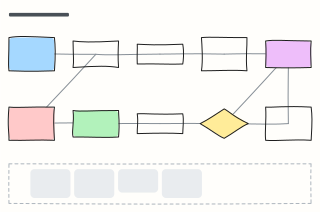 MLOps lifecycle
The machine learning loop from problem framing to monitored production model, with retraining when data drifts.
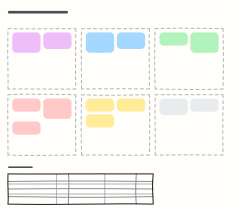 Prompt design canvas
Design a production prompt piece by piece — role, context, task, constraints, examples, output format — plus test cases.
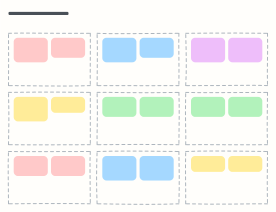 AI use-case canvas
Assess an AI opportunity on one page: problem, users, data, approach, value, risks and the smallest pilot.
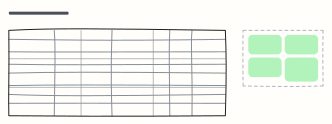 Model evaluation plan
Metrics, datasets, targets and owners for evaluating an LLM or ML model, plus the gate a release must pass.
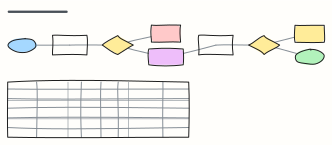 AI guardrails & risk register
Input and output guardrails around an LLM call, with a risk register for hallucination, injection, leakage and bias.
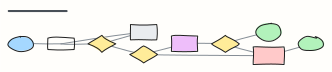 Chatbot with human handoff
A support chatbot conversation flow: intent detection, clarifying questions, knowledge-base answers and escalation to an agent.
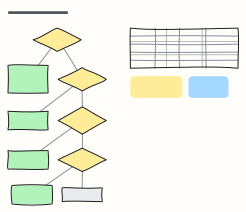 Prompting vs RAG vs fine-tuning
A decision tree for choosing prompt engineering, RAG, fine-tuning or an agent, with a cost and speed comparison.
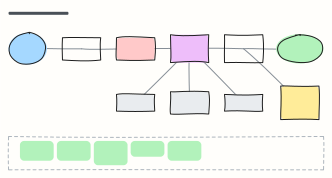 LLM application architecture
Production building blocks around a model: gateway, guardrails, orchestrator, cache, vector DB, tools and observability.
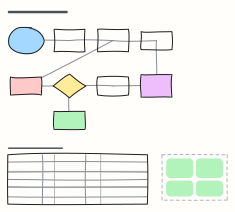 LLM fine-tuning workflow
Fine-tune a model step by step: define the task, build a clean dataset, train a LoRA adapter, evaluate against the baseline and ship.
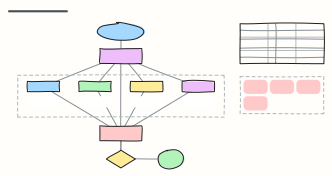 Multi-agent orchestration
An orchestrator agent splits a goal across specialist agents with their own tools, then a reviewer agent checks the result.
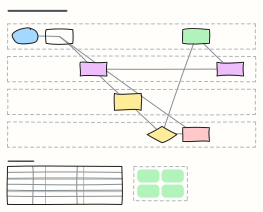 Data labeling pipeline
Who does what when labeling training data: guidelines, model pre-labels, double annotation, QA on agreement and retraining.
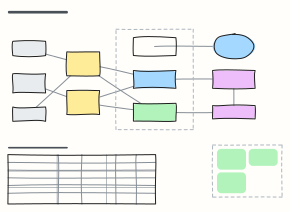 ML feature store
How a feature store serves the same features to training and real-time inference: batch and streaming pipelines, offline and online stores.
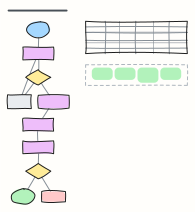 Prompt chaining workflow
Break one big LLM task into small chained prompts with checks between them: classify, extract, draft, critique, send.
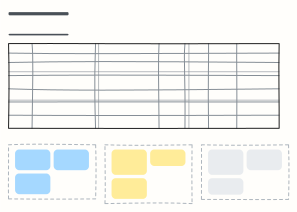 ML experiment tracker
Log every model experiment with its hypothesis, change, metrics and decision, so the team knows what worked and what to try next.
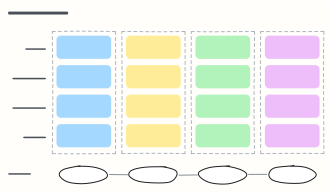 AI adoption roadmap
A four-quarter plan for bringing AI into a company: use cases, data and platform, people and skills, and governance per phase.
When to use them
- Explaining an LLM feature's architecture to engineers and stakeholders
- Deciding between prompting, retrieval and fine-tuning
- Planning evaluations and risks before launch
Working on an AI diagram in Kelvo
- Sketch, then convert
- Draw boxes and arrows with the pen, select the strokes and click Convert sketch: they become real boxes and links.
- Ask Kelvo right on the board (Pro)
- With Pro, type @kelvo and what you want in any box or text, for example “@kelvo add error handling”, and press Enter. The change is made there and the request disappears; ⌘Z undoes it.
- Keep the prompt next to the diagram
- Add a code block from the Insert (+) menu for prompts, schemas or config, right beside the boxes they belong to.
- Keep versions apart
- Use pages for alternatives or iterations of the same board, and version history to go back to an earlier state.